

All · Social posts · Memes
053What Should I Wear Today?
A photographic outfit card that separates indoor basics from a removable travel layer, or assembles them into one flat lay.
What you get
- One personal outfit story card with realistic clothing textures
- Separate indoor and travel bays, or one assembled flat lay
- Garment labels, a layering note and an accent color
ChatGPT Free OK
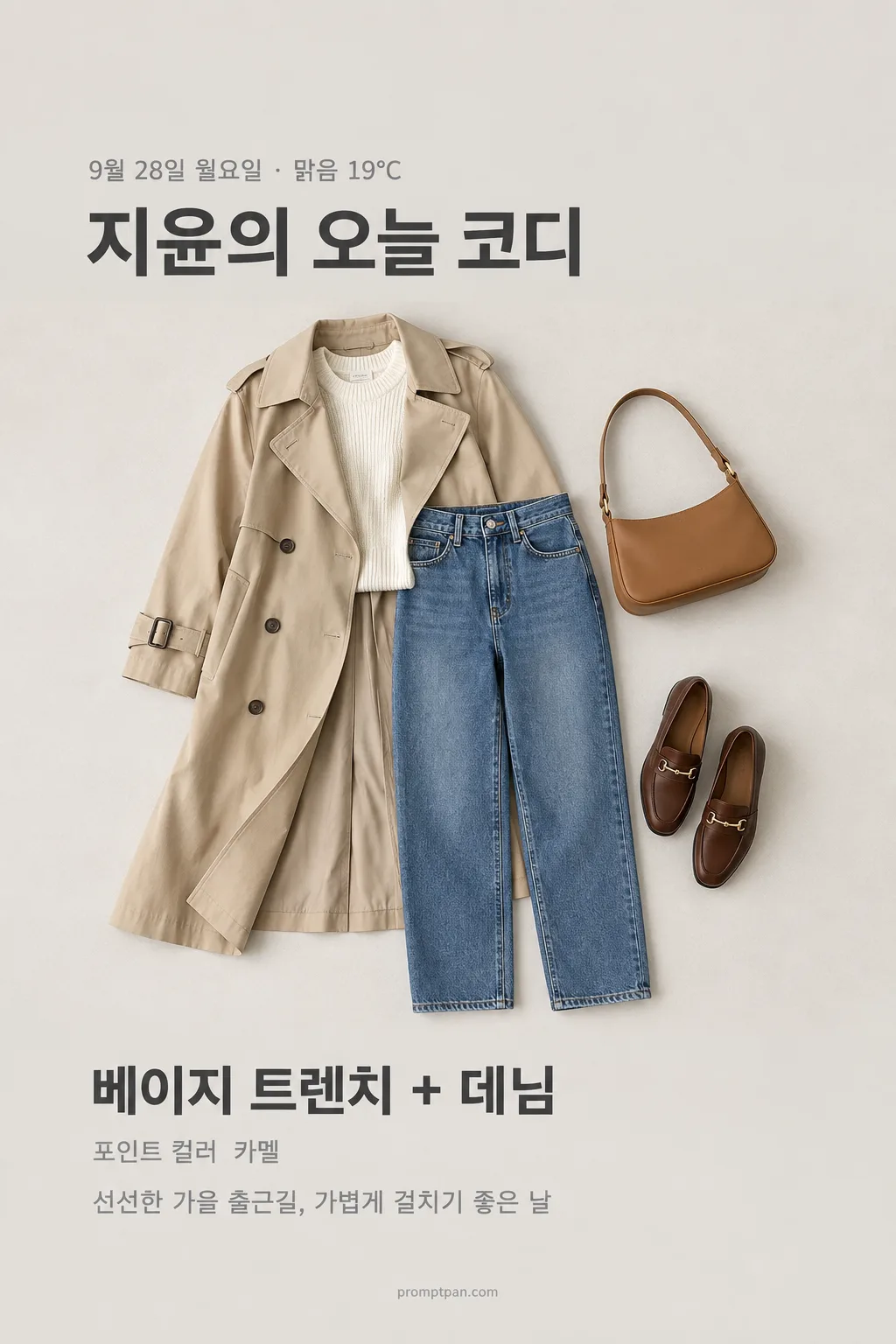
Fill in the fields
- 1Fill in the fields
- 2Copy the prompt
- 3Paste it into a GPT chat
- 4Send it as is and you get an image like the thumbnail example
- 5Attach a real photo that fits the card and it is used in the result: a background photo for background cards, a person or food photo for those cards Optional
Full prompt 4,431 characters
Generate one finished photographic daily outfit story card. Return the image itself. Output size 1080x1920 pixels, 9:16 portrait story. Keep all text inside the central 80% of the height.
The central device is a REMOVABLE-LAYER MAP: distinguish clothes kept on indoors from the outer layer worn during travel. This is one wearable outfit, never two competing recommendations. Preserve a realistic overhead flat-lay clothing photograph, warm ivory surface, charcoal editorial type, fine rules and a small burgundy accent. Cotton weave, denim twill, leather grain and soft contact shadows should look tactile rather than illustrated or rendered.

PERSON: 【Name】
OUTFIT DATE: 【Date】
BIRTHDAY: 【Birthday】
OPTIONAL TYPE: 【MBTI】
PLAN: 【Today’s plan】
PRESENTATION: 【Clothing preference】
INDOOR BASE: 【Indoor base】
TRAVEL LAYER: 【Travel outerwear】
FOOTWEAR AND ACCESSORY: 【Shoes and accessory】
UNFOLDING: 【Outfit layout】
SUPPLIED WEATHER: 【Weather】
SUPPLIED TEMPERATURE: 【Temperature】
AVOID: 【Avoid】
AREA: 【Area】

Treat the three wardrobe fields as a garment ledger. Depict each named garment once, shoes as one matching pair. Keep their supplied colors and materials. Do not invent extra clothes or claim to own anything not supplied. Choose neutral missing essentials only when an outfit cannot be completed, marking additions with Suggested. An absent optional field removes its line. A supplied avoided item takes priority over a conflicting garment: omit it and mark that category Check needed rather than silently replacing it. Use presentation as clothing preference, never a body or gender diagnosis. No people, hands, mannequins, prices, logos or shopping links.

The UNFOLDING selector changes spatial construction:
Separate indoor and travel: divide the photographic middle into TWO UNEQUAL VERTICAL BAYS with a fine divider. The left bay occupies about two thirds: title Indoor base, the top above the trousers, shoes beneath. The right bay is a separate full-length narrow coat station: title For travel +, the outer coat fully opened and isolated with the bag below. There is clear empty surface between coat and indoor garments; the coat must not overlap the shirt. Direct short leader labels identify each garment in its own bay. Beneath the bays, one practical sentence explains removing the coat indoors and adding it during travel. No second copy of the shirt, trousers or shoes in the coat bay.
One assembled outfit: remove the vertical divider and both bay titles completely. Build ONE CENTRAL DRESSED-SHAPED FLAT LAY without a body: the opened outer coat lies behind and partially overlaps the shirt at shoulder height, trousers descend from the shirt, matching shoes below, bag at the side. All garments share one continuous photographic field. Put a single short garment ledger along the bottom, not two side stations. No isolated coat bay. Preserve the same outfit, materials, surface, type and accent; changing only a color is insufficient.

At top print 【Name】 — today’s outfit as largest title, then exact OUTFIT DATE. Under it print Supplied conditions followed by supplied weather, temperature and area only. No live lookup or invented forecast. If weather is missing print Weather not supplied. Under the photograph show Layer weight with a short practical layering note based only on supplied conditions; if supplied clothes conflict with the conditions, say Check extra clothing for the weather rather than declaring them suitable. Use PLAN to phrase the practical note. Keep all text in comfortable story-safe margins and garment labels readable on a phone.
One small Just for fun sentence may play on the supplied birth month and optional type, without a zodiac calculation, personality claim or prediction; omit missing cues. The birthday is never today's date. At bottom print Today’s accent color with one swatch matching a visible garment, then tiny promptpan.com. Visible wording is English except supplied type letters and footer. Internal keys, braces and selector values are not captions. Finish a flat vertical social card, no phone mockup, no decorative props, no watermark, no illustration or synthetic plastic fabric.

[Final output format]
Output size 1080x1920 pixels, 9:16 portrait story. Keep all text inside the central 80% of the height.
This selected output format takes priority over any fixed canvas size or aspect ratio elsewhere in this template. Adapt the composition, text zones and margins to the selected canvas without stretching or cropping essential content. Device safe areas apply only when a device is selected. Never print these format instructions on the image.
How did it turn out?
More cards in this category

How to use it · FAQ
In two runs with a beige trench coat and an ivory tee, the tee, denim trousers and loafers stayed on the left while the coat and burgundy bag stayed on the right. The clothes left after removing the coat were easy to see, and the label leaders pointed to their garments. Fabric creases and denim stitching looked photographic.
The coat moved behind the tee
Changing only “Outfit layout” to “One assembled outfit” removed the vertical divider and both bay headings. The coat wrapped behind the tee’s shoulders, trousers continued below, and the separate bag moved alongside them. Use the assembled view to share a commute outfit, or the separated view to see what comes off indoors. These are two presentations of one outfit, rather than alternative recommendations.
Sort the wardrobe by what stays on
Indoor base holds the top and bottom worn after taking off the coat. Travel outerwear holds only the removable layer; shoes and the accessory have their own field. Repeating the coat in both fields may create a duplicate. Materials such as cotton tee or wool coat help distinguish the layers. The test used supplied conditions of 9°C in the morning and 18°C in the afternoon; it did not verify live weather or physical comfort. Birthday and type wording is playful, with no personality or warmth assessment.
Bay widths and extra text varied
The first image made the bays more equal than requested. The second printed the birth date and an unnecessary clothing-preference line below the header. The assembled view repeated garment names beside the photograph and in the bottom ledger. The construction changed, but lettering placement was not identical. Before sharing, check for a birth date you would rather keep private. A targeted follow-up is: “Keep the clothes and layout; remove only the birth date and clothing-preference line.” English and Japanese images, rain or cold conditions, and conflicting avoided garments were not tested in these three images.
Last checked · Published