項目を入力
- 1項目を入力します
- 2コピーを押します
- 3GPTのチャットに貼り付けます
- 4写真を使う場合は写真とプロンプトを一緒に送ります 任意
プロンプト全文を見る 5,693文字
Generate this image now. Draw it directly - do not describe it, explain it, or ask questions.
A3横、420×297mm、縦横比1.414:1のポスターを1枚作成してください。生成できる最大解像度を使い、印刷用の最終目標は4961×3508ピクセル、300dpiです。文字は紙の端から10mm以上内側に置いてください。

[Purpose]
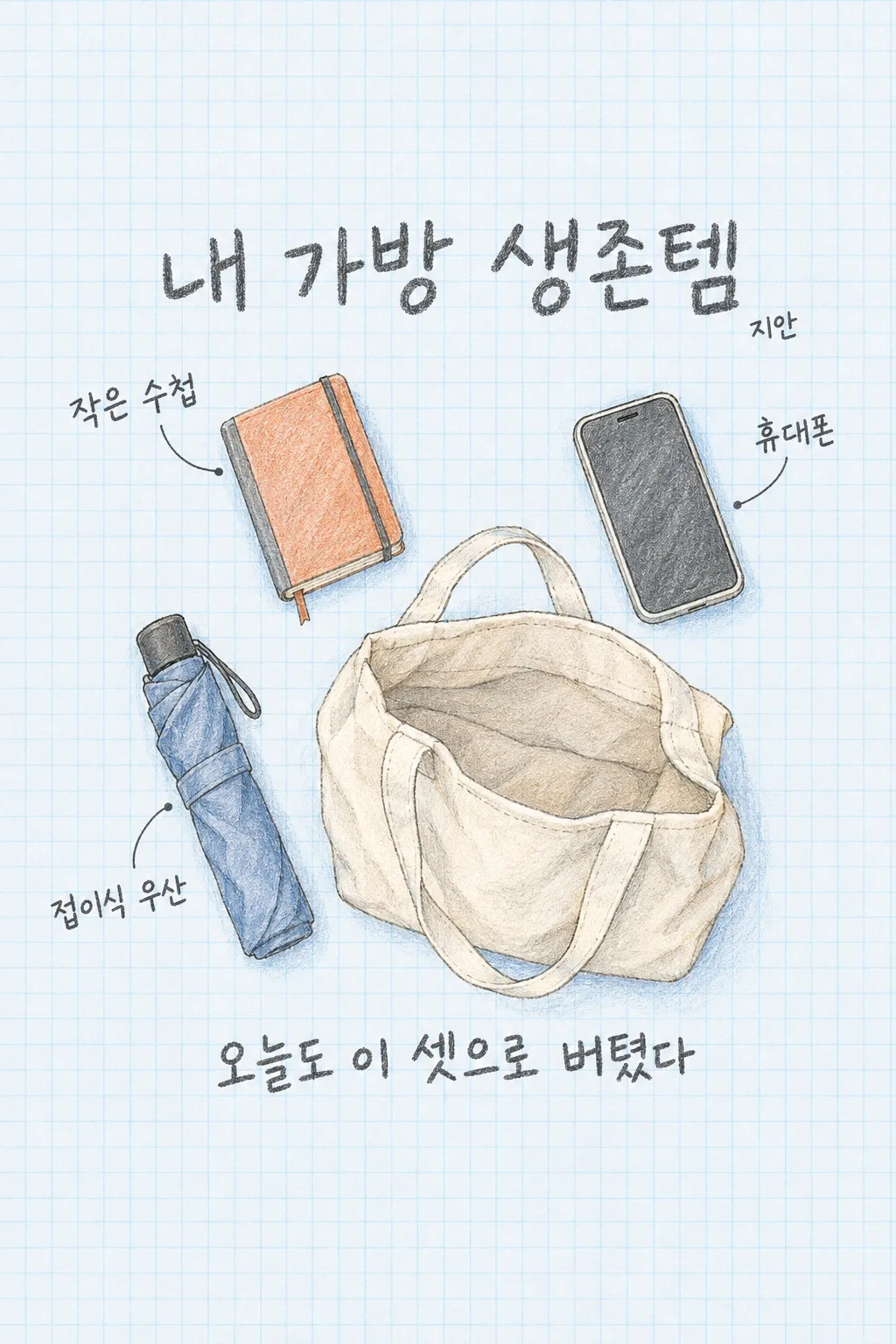
Create one ready-to-share illustrated daily-carry card titled "バッグの相棒3つ". The user names three actual objects carried today. Turn these objects into one overhead pen-and-colored-pencil arrangement around an open cream canvas tote. This is a personal social post about everyday taste and small comforts, not a product recommendation, shopping list, weight measurement or survival instruction. It is one continuous illustrated sheet, never three separate object cards.

[Scene]
Draw the three supplied objects: "【一つ目の物】", "【二つ目の物】" and "【三つ目の物】". Use ordinary recognizable silhouettes with no brand logo or invented specifications. A small notebook has a bound cover, an umbrella has a believable folded shaft, and a phone is a simple unbranded rectangle; follow other supplied objects equally literally. These examples do not add extra objects to the user's selection. If two names mean the same object, show it once and do not fabricate a replacement. There is one fixed off-white canvas tote, with an open mouth, seam lines, two connected handles and natural fabric folds. The tote's shape is fixed; the personal object contents can vary.

[Attached photo]
No photograph is required. Interpret the words as everyday objects using original linework. Do not infer a person's occupation, income, health, secrets or habits from the items. No human face or hands appear. Render only the supplied three distinct items and one tote; add no keys, receipt, identity document, bank card, medication, food or extra phone by default.

[Text layout]
All visible wording is Japanese. Fill the canvas with very pale blue graph paper and loose graphite outlines with small rust and slate-blue pencil accents. Keep top12% and bottom15% free of important words. At15-24% place the exact title "バッグの相棒3つ" in large dark graphite hand lettering. The tote occupies the lower-center, about x35-76% and y43-70%, viewed from directly above with its opening visible. Arrange one object upper-left at y29-43%, one upper-right at y31-49%, and one lower-left at y53-70%. Give each distinct object ONE handwritten label using its provided name, linked by one thin curved pointer ending beside the object. Keep pointer lines clear of letter interiors. A long object may follow the left edge diagonally. End every object and object label above74% height. Preserve breathing room rather than arranging a rigid grid. Strictly leave top0-12% and bottom85-100% as graph paper only. The title starts BELOW15% and the entire caption ends BEFORE81%; do not push either text block to the image edges.
If supplied, put "【名前】" once as a small personal signature at26-28%, aligned with the title. Omit this signature when the instruction is absent.
The personal caption input is "【ひと言】". If it equals "おまかせ", write one original short Japanese line about the three objects keeping the day manageable. Do not invent events, prices, a diagnosis or a real measured bag weight. Otherwise render the user's caption faithfully. Put this single caption at75-80% in large dark pencil handwriting, no more than two short lines. The title, item labels, optional signature and caption are the only text.

[Style and visual hierarchy]
One fixed charming overhead stationery illustration: visible pencil grain, wobbly fine pen contours, translucent colored-pencil filling, natural fabric shading. It feels like a personal notebook page made for sharing. Do not turn it into photorealistic product flat-lay, a retail advertisement, a sticker-pack grid, comic panels or multiple pages. The tote is the main shape, while the objects surround it at different angles. Item labels must remain large enough to read at list size. The whole page should feel connected by the placement of objects and the thin pointing lines, without a box behind each label.

[Lighting and texture]
Use gentle diffuse imagined daylight, light blue paper texture and small soft pencil shadows below each object. Never use glossy neon, bold drop shadows, repeated pattern objects, decorative unreadable script or a barcode. Objects have coherent real shapes: notebook pages join their cover, phone corners agree, tote handles connect to the rim, and folded umbrella ribs stay inside the fabric. Do not claim a diagram measures physical dimensions. Preserve the finished page without requiring users to rearrange anything.

[Text rules]
All quoted visible copy belongs to the artwork, while input labels and instruction headings do not. Resolve any automatic wording control into a short original sentence before drawing; never print that control literally. Preserve provided spelling and numbers, and use the target language consistently. Keep readable letters separate from highlights, folds, shadows and decorative marks. Do not invent a price, discount, date, availability, award, endorsement, biography or purchasing condition. The fixed composition and medium stay the same for every user; personal inputs change its content only.

[Avoid and final delivery]
Deliver exactly ONE finished raster image in this response. Draw it directly with image generation. Do not execute code, give drawing instructions instead of an image, offer multiple versions, create separate pages, ask for a next message, or require cropping and assembly. No phone mockup, browser frame, watermark, publisher logo, branded packaging, existing character or celebrity likeness. Finish all artwork within the selected aspect ratio, preserving the composition and large readable lettering. Leave the upper 12% and lower 15% free of essential lettering and maintain generous side margins.
こちらのカードも人気です
使い方・よくある質問
持ち物で今日を紹介
小さなノート、折りたたみ傘、スマートフォンなど、今日持っていた三つの物を一枚に記録するカードです。名前を入力すると、開いた布バッグとその周りの物を真上から見た鉛筆イラストになります。細い線で名前を結び、短いひと言を添えます。ストーリーズやThreadsで「あなたは何を持ち歩く?」と日常の好みを紹介するときに使えます。それぞれを撮影したり、別々の画像を編集したりする必要はありません。
一つの欄に一つ
一つ目、二つ目、三つ目の物に、実際に持っていた物を一つずつ書きます。「小さなノート」「折りたたみ傘」のように形の分かる短い名前がおすすめです。一つの欄に長いリストを入れると絵と文字が細かくなります。ブランド名は不要です。名前の欄は任意で、空欄にすると小さな署名だけがなくなります。クリーム色の布バッグ、真上からの構図、鉛筆の技法は固定です。
ひと言を任せる
言葉が思いつかないときは、ひと言の先頭にある「おまかせ」を選んでください。入力した三つの物に合う短い生活の言葉をGPTが作ります。自分で書いてもかまいません。書いていない出来事、金額、実際の重さは作りません。バッグを量るカードや買い物のおすすめではないため、グラムや値段を勝手に表示しない構成です。
写真なしで使えます
欄を埋め、完成したプロンプトをGPTに一度貼って送ります。出てくるのは日常の物を描いた共有用の絵で、製品の寸法を証明する図面ではありません。身分証や財布の番号など、公開する必要のない情報は書かず、一般的な物の名前だけにしてください。実物の細かな型番を知らなくても、形の分かる線画として描きます。
投稿前の確認
まず、入力した物があり、余計な物が増えていないか見ます。次に、名前の線がそれぞれ正しい物を指すか確認してください。バッグの持ち手は開口部につながり、傘の柄と布は自然につながっている必要があります。タイトルとひと言はスマートフォンで読める大きさにします。別々の四角い枠に入った商品一覧ではなく、一枚の紙の上につながったコラージュが完成形です。
分かりやすく直す
物が違って描かれたら、長い説明より「黒い折りたたみ傘」のような短く具体的な名前に直してください。文章が長ければひと言を短くします。修正したプロンプト全体を新しいメッセージで送り、一枚を作り直します。一つずつ生成して切り貼りする工程はありません。日々の中身は変えられますが、布バッグと鉛筆コラージュの形は同じです。
よくある質問
- 実際の重さが分かりますか? いいえ。入力した物を絵にするだけで重さは推測しません。
- 写真が必要ですか? 不要です。三つの名前からイラストを作ります。
- 六つの物を入れてもいいですか? 三つに合わせた構図なので、一つの欄に一つをおすすめします。
- 無料GPT画面で試しましたか? 制作時は画像APIで表紙を確認しました。無料GPT画面での直接生成テストは行っていません。