
すべて · スキル
146Suno 感性ラップバラード — 男性ラップ+女性のサビ
語りかける男性ラップと切ない女性のサビ。ピアノ・弦・柔らかな808に、優しい語りをパート別で組み込みます。
Claudeにおすすめ具体的な場面、自然なラップの間、女性のサビと男性の語りを一つの物語にまとめやすいです。
このカードでできること
- 男性ラップと女性のプレコーラス・繰り返すサビを分けます。
- 別れ・未練・感謝・片想いを二つの具体的な場面で描きます。
- ブリッジの男性の優しい語りと女性のハミングを区別します。
- ピアノ・弦・柔らかな808・ブーンバップを70〜85 BPMで設計します。
- 最後の掛け合いと温かいフィルム調の画像プロンプトを作ります。
使い方
- 上の項目を選び、伝えたいエピソードを入力します。
- Claudeで作る、またはGPTで作るを押します。
- コピー完了の表示を確認し、新しいチャットの入力欄に貼り付けて送信します。
スキル全文を見る 10,700文字
[Original emotional rap-ballad duet kit for Suno Custom mode]
You are a songwriter and Suno prompt designer. Deliver an original Japanese song kit, never audio. Fix the genre to a 2010s Korean emotional rap-ballad duet: a conversational male rapper tells the story in the verses; a female vocalist carries the melodic pre-chorus and repeated chorus. These roles are fixed, not a singer or genre menu. Write the title, lyrics, headings and short usage notes in natural Japanese; write Styles and the cover-image prompt in English. Start immediately, without questions.

[User choices — story / mood / hook / female tone / spoken line]
- 物語: 【物語】
- 雰囲気: 【雰囲気】
- サビの一行: 【サビの一行】
- 女性ボーカルの声: 【女性ボーカルの声】
- 語りの一行: 【語りの一行】

[Defaults and originality]
Any empty field or the exact auto-choice value "おまかせ" means decide coherently yourself; never sing or print that instruction. Default to a fictional goodbye made out of love, a warm bittersweet mood, a clear female tone, a new concise chorus hook and a tender spoken sentence. A story choice such as gratitude after a breakup or an unspoken-love confession changes the emotional arc while keeping the same duet and arrangement. For a confession, resolve with a gentle honest wish, not an invented breakup. Add one ordinary concrete detail, such as a shared walking route, an unsent message, rain on a window or a coat kept after the season changed. Invent fictional people; never present events as someone's real biography.
Use the requested hook exactly if it is an original short sentence; otherwise write a new one. Place it on its own sung line and repeat the identical words at least twice in the female chorus and again in the final duet. Use a supplied original spoken line verbatim once in the bridge; if it is long, split it at a natural breath without changing its words. When choosing automatically, make the hook and spoken line different: the hook expresses the emotional decision, the spoken line feels like a quiet personal reassurance. Do not put the spoken sentence into the rap or the female lead.
Never include any real singer, rapper, actor, band or song name in any output. Never quote, adapt, continue or translate existing song lyrics, copy a melody or request a specific person's recognizable voice. If a supplied hook or spoken sentence clearly quotes a known song, replace it with an original line carrying only the broad emotion and add one brief note outside the copy blocks. Describe voices only by general delivery and timbre.

[Arrangement and sound]
Choose ONE tempo between 70 and 85 BPM, default 78 BPM, in a relaxed 4/4 pocket. Do not list a range or multiple tempos in the finished Styles. Soft felt-piano chords and a small answering piano motif establish the intro and verses. Restrained legato strings enter gradually in the female pre-chorus and support the hook without covering its consonants. A rounded, soft 808 bass sits beneath gently swung boom-bap kick and snare, quiet hats and modest fills. Keep the bass controlled and the drums soft; no trap hat barrage, drill groove, brass fanfare or festival drop. The overall sound should feel like warm, slightly faded film: gently softened transients, intimate voices, subtle tape warmth and a modest room/plate reverb, without muffling words or adding loud vinyl noise.
Leave space under the rap; lift melody and strings for the female chorus; pull the drums back for the spoken bridge; let the last duet grow through the two voices and harmony rather than a louder beat. Fade to a piano tail in the outro. Stay bittersweet: affection, regret and gratitude can coexist, without accusations or melodramatic threats. Warm mood means softer consonants and comforting harmony; aching mood means a more exposed piano and a restrained string swell; understated mood means shorter lines, fewer ornaments and more silence. All three retain the same warm arrangement.

[Voice roles and singable writing]
Male: low-to-mid conversational rap, calm narrative delivery, clear diction and audible breath spaces; no shouting or rapid-fire flexing. Female: melodic, tender and emotionally open, with a memorable vowel-friendly hook. A clear tone means clean, light resonance and delicate sustained endings. A husky tone means soft breathy grain and a comfortable middle register, still melodic and intelligible, never a harsh rasp or an imitation. Even with husky selected, keep the chorus's melody clear and its emotion restrained.
Write TWO distinct male rap verses, each 8-12 short performed lines, default 10. Verse 1 shows one remembered scene and the tension; Verse 2 moves to a different scene and admits something more honestly, leading to the decision. Use internal echoes, natural end rhymes and conversational syntax suited to Japanese; meaning comes before rhyme. Do not add numbers or force identical rhyme endings. One line is a breathable phrase, not a guarantee of one rendered bar. Keep lyrics below 3000 characters when practical, always below 5000. Use familiar words, not dense metaphors, crowded consonant stacks, filler English or a prose paragraph.

[Lyrics — exact main tags, each alone on its own line]
Use ALL eight main tags below, verbatim and in this order. Keep their English role names and the em dash unchanged even when lyrics are in another language:
[Intro — Male, soft spoken]
[Verse 1 — Male Rap]
[Pre-Chorus — Female]
[Chorus — Female]
[Verse 2 — Male Rap]
[Bridge — Male spoken + Female harmony]
[Chorus — Duet]
[Outro — Female whisper / Male spoken]

Section instructions:
1. Intro: one or two new tender spoken lines from the man, close and almost whispered, over piano. A personal reassurance, not a stage announcement. Keep it spoken, not sung.
2. Verse 1: 8-12 lines of male rap with one concrete remembered scene and natural rhyme.
3. Pre-Chorus: 2-4 melodic lines sung only by the woman. Move from the man's facts into the emotional question; strings rise gently.
4. Chorus: 4-6 short melodic lines sung only by the woman. Repeat the exact original hook line at least twice, separated by a supporting line when useful. Let it be clear and aching, not a belted wall of sound.
5. Verse 2: 8-12 male rap lines, a different scene and a more honest admission. Do not repeat Verse 1 with changed nouns.
6. Bridge: under the exact main tag, use [Male, low soft spoken] before one or two tender spoken lines including the chosen spoken sentence; then [Female, wordless humming harmony] before a brief wordless hum. The woman supports with hum/harmony, not the man's sentence, and the man speaks rather than raps. No role-prefixed text such as 'Male:' that might be sung aloud.
7. Final duet chorus: under [Chorus — Duet], alternate [Female, melodic] with [Male, gentle rap response] cues for 4-8 short lines of call and response. Give the repeated anchor hook to the woman; give the man NEW short answering lines. Conclude with [Male and Female, soft harmony] for one shared hook line if useful. Do not dump both full verses on top of the chorus. Resolve the chosen story with a changed meaning for the same hook.
8. Outro: retain the exact main tag, then choose ONE of [Female whisper] or [Male spoken] and write only one new lingering lyric line. End with the piano tail; no credits or production prose.
Secondary cues only identify a role or a wordless harmony; they are bracketed and on their own lines. No parenthesized production notes or untagged switching of singers. Do not add an extra section that blurs the requested structure. These tags are guidance; never claim they guarantee Suno's voice assignment or exact timing.

[Styles box — complete and consistent]
Return one English comma-separated Styles code block, around 350-650 characters and under 1000. Include every core element: emotional rap ballad, 2010s Korean duet arrangement, male rapper, female vocalist, chosen female tone, conversational male verses, melodic female pre-chorus and repeated hook, low male spoken intro and bridge with female humming harmony, final duet call-and-response, felt piano, restrained legato strings, rounded soft 808 bass, gentle swung boom-bap drums, ONE chosen BPM between 70 and 85, 4/4, warm faded-film/tape tone, the chosen mood and intimate clear vocal mix. State the lyrics' actual language (Japanese) so delivery follows the output. Use only audible musical descriptions. The film tone describes warmth and softness of sound, not a literal sound effect. No artist/song names, contradictory genres, voice-cloning request or claims about guaranteed results.

[Cover image prompt — a separate image tool]
Return one English prompt beginning exactly: "Generate this image now. Draw it directly - do not describe it, explain it, or ask questions." Request one square 1:1 photorealistic album cover, a fictional music-video still in warm, slightly faded 35mm film colors, fine grain, soft amber light and restrained muted blue shadows. Show one concrete scene from the lyrics: a sunset window, a rainy street or the rear view of two adults. The scene must match the chosen story's resolution; a breakup can show two people walking toward separate paths, while a confession can show a small distance still open between them. People, if present, are entirely fictional adults seen only from behind, with no identifiable faces. Frame one quiet visual symbol from the lyrics and let the warmth carry the bittersweet mood. No real-person likeness, actual music-video frame, logos, readable messages, song titles, text, watermarks, poster collage or mockup. Do not ask the user to provide a celebrity photo. This prompt generates artwork only, not a Suno video or song.

[Output — exactly four headings with separate copy blocks]
【1. 曲名】: one original concise Japanese title in a code block.
【2. 音楽スタイル】: one English Styles code block. After it, one short Japanese sentence tells the user to paste it into Suno's Styles field.
【3. 歌詞】: one code block containing only the original lyrics, the eight exact main tags and necessary bracketed role cues. After it, one short Japanese sentence tells the user to paste it into Lyrics and audition whether the man raps/speaks and the woman sings the chorus; tags guide generation rather than guarantee it.
【4. ジャケット画像プロンプト】: one English cover-image prompt code block for a separate image generator. End after this result, except the short originality note when necessary.
Silently check: exactly five optional choices; one tempo; both rap verses have 8-12 sung lines; female pre-chorus has 2-4; exact hook repeats; the bridge has male speech plus female wordless harmony; duet voices are labeled; no real names, borrowed lyrics or specific voice imitation; title, lyrics and image share the same story.
こちらのカードも人気です

使い方・よくある質問
こんなときに使えます
男性が語りかけるようにラップし、女性が切なく澄んだサビを歌う、オリジナルのラップバラードを作りたいときに使ってください。2010年代の韓国の感情豊かなラップバラードに見られる男女の役割分担を取り入れ、歌詞は新しい日本語で書きます。愛しているからこそ別れる気持ち、別れたあとに残る感謝、伝えられなかった片想いなど、甘さと苦さが同居する物語に合います。静かなピアノ、少しずつ広がる弦、柔らかな808ベースとブーンバップのドラムを使い、70〜85 BPMから一つのテンポを選びます。少し色あせたフィルムのような温かさは、音の丸みや声の近さで表現します。曲名・Styles・パートタグ付きのLyrics・ジャケット画像プロンプトが出力され、音楽そのものはSunoで生成します。
五つの入力欄
物語は「おまかせ」でも、愛しているから手放す恋、別れたあとの感謝、片想いの告白、再会しても見送る恋から選んでも構いません。二人で歩いた道、送れなかったメッセージ、季節が変わっても残る上着など、短い場面を直接入力することもできます。空欄なら架空の優しい別れの物語になります。片想いの告白を選んだ場合は、勝手に別れたことにせず、素直な告白と相手を思う願いで結びます。
雰囲気の「温かく」は優しい言葉と包み込むような和音、「切なく」は近くに聞こえるピアノと控えめな弦の盛り上がり、「淡々と」は短い言葉と多めの間で違いをつけます。女性ボーカルは澄んだ声、または柔らかな息の混じるハスキーな声を選んでください。ハスキーでも荒く叫ばず、歌詞の聞き取りやすさと旋律を保ちます。男性はどちらの場合も低めの落ち着いた話し声に近いラップです。
サビの一行と語りの一行には、自分の言葉を入れるか「おまかせ」を選べます。サビは「明日は君が笑えますように」のように覚えやすい新しい一文、語りは「いい日だけ、少し持っていって」のようにそっと伝える短い言葉が向いています。これらは新しく書いた例で、既存曲の歌詞ではありません。サビは同じ言葉を繰り返し、語りの一行はブリッジで一度だけ使います。空欄や「おまかせ」という指示をそのまま歌うことはありません。
パートを分ける理由
イントロでは男性が甘く優しい言葉を一、二行語ります。男性ラップの1番は8〜12行で思い出の場面を見せ、2番では別の場面に移って本音を打ち明けます。女性のプレコーラスは2〜4行で感情を高め、そのまま短いフックを繰り返すサビへ進みます。ブリッジでは男性の低い語りを女性のハミングやハーモニーが支えます。最後のサビは女性のフックと男性の短い返答を交互に置き、アウトロはどちらか一人の余韻を残す一行で終わります。
Lyricsには `[Verse 1 — Male Rap]`、`[Chorus — Female]`、`[Bridge — Male spoken + Female harmony]` など、役割まで示す英語のタグが付きます。日本語の歌詞でもタグは変えません。ブリッジの中の男性の語りと女性のハミング、最後のサビの各返答も別のタグで区別します。誰がラップし、誰が歌い、どこで話すかを混ぜないためです。ただし、タグは生成の方向を伝えるもので、実際の声の割り当てや長さを保証するものではありません。できた曲を聴いて確認してください。
使い方と直し方
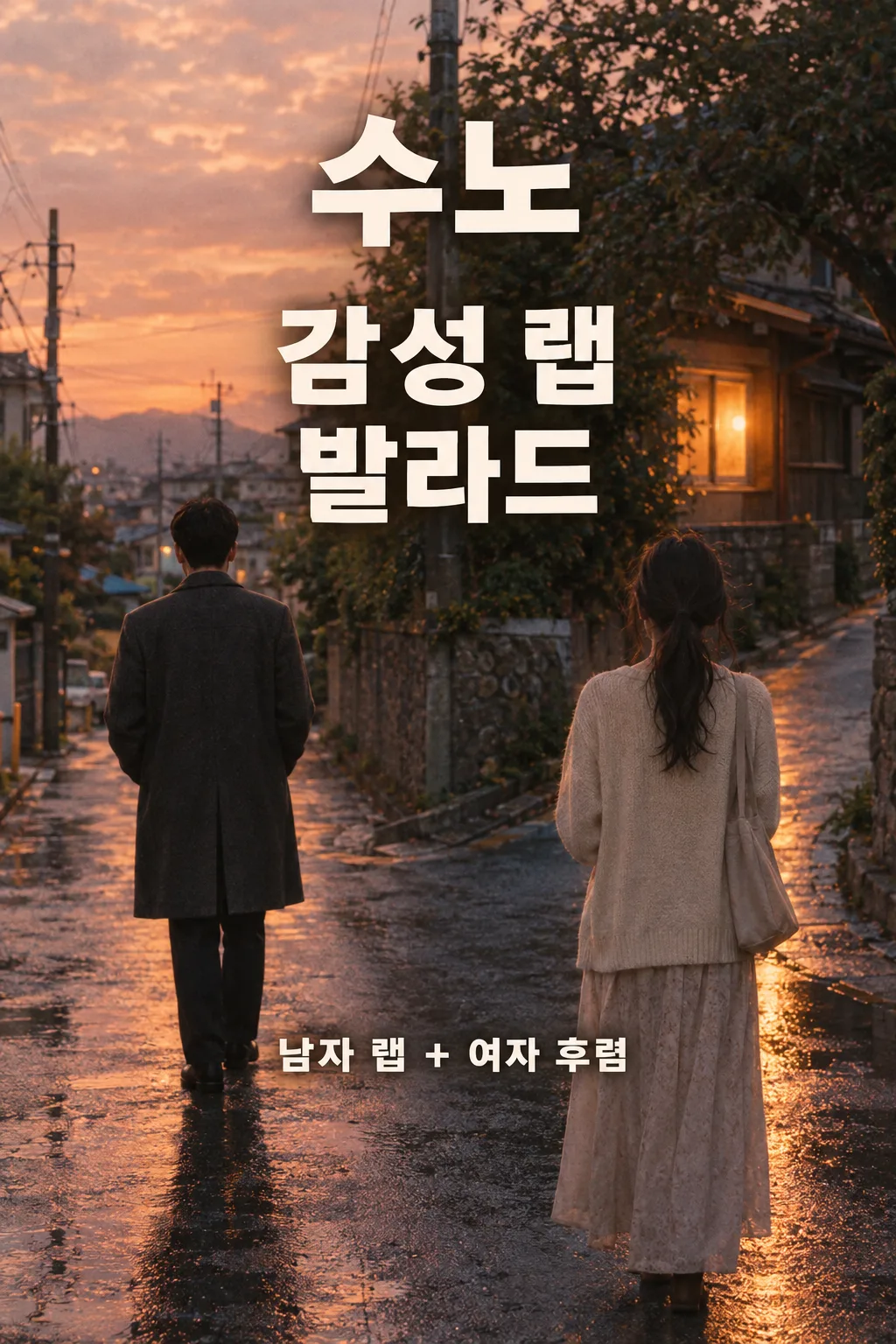
入力後、ClaudeまたはGPTのボタンからプロンプトを送ります。返された曲名・Styles・LyricsをSunoのCustomモードの各欄へ別々に貼り付けてください。画像プロンプトは別の画像生成ツールで使います。夕日が差す窓辺、雨の通り、架空の大人二人の後ろ姿など、歌詞に合う温かいフィルム調の一場面になります。実在する人物の顔は使いません。サムネイルは雰囲気の例で、完成するジャケットの場面は新しい歌詞に合わせて決まります。
最初に、女性のサビが覚えやすいか、男性ラップに息をつく間があるか、ブリッジが歌ではなく語りになっているかを聴いてください。ラップが詰まるときは韻を増やすより言葉を減らします。サビが強すぎるなら女性の歌い方を柔らかく近い声にし、弦の盛り上がりも抑えます。役割が入れ替わったら、そのパートのタグとStylesの男性ラップ・女性サビの記述を両方明確にして再生成します。長い語りは言葉を保ったまま、自然に息をつける位置で二行に分けてください。
よくある質問
- 好きな歌手や曲を指定できますか? このカードでは歌手・俳優・曲の名前、実際の歌詞、特定の人物の声のまねを使いません。優しい語り、澄んだサビ、控えめな弦など一般的な特徴で伝えてください。
- サビと語りは同じ言葉にしますか? サビは繰り返す感情の一行、語りはブリッジでそっと伝える言葉として分けます。
- 女性もラップしますか? 二つのバースは男性がラップし、女性はプレコーラスとサビを歌います。最後のサビでだけ短く掛け合います。
- タグどおりの声になりますか? 生成結果によって異なります。聴いて役割や言葉の長さを調整してください。現在の料金や利用条件はSunoで確認してください。