전체 · SNS/카드뉴스 · 밈·공감
191내가 문구라면?
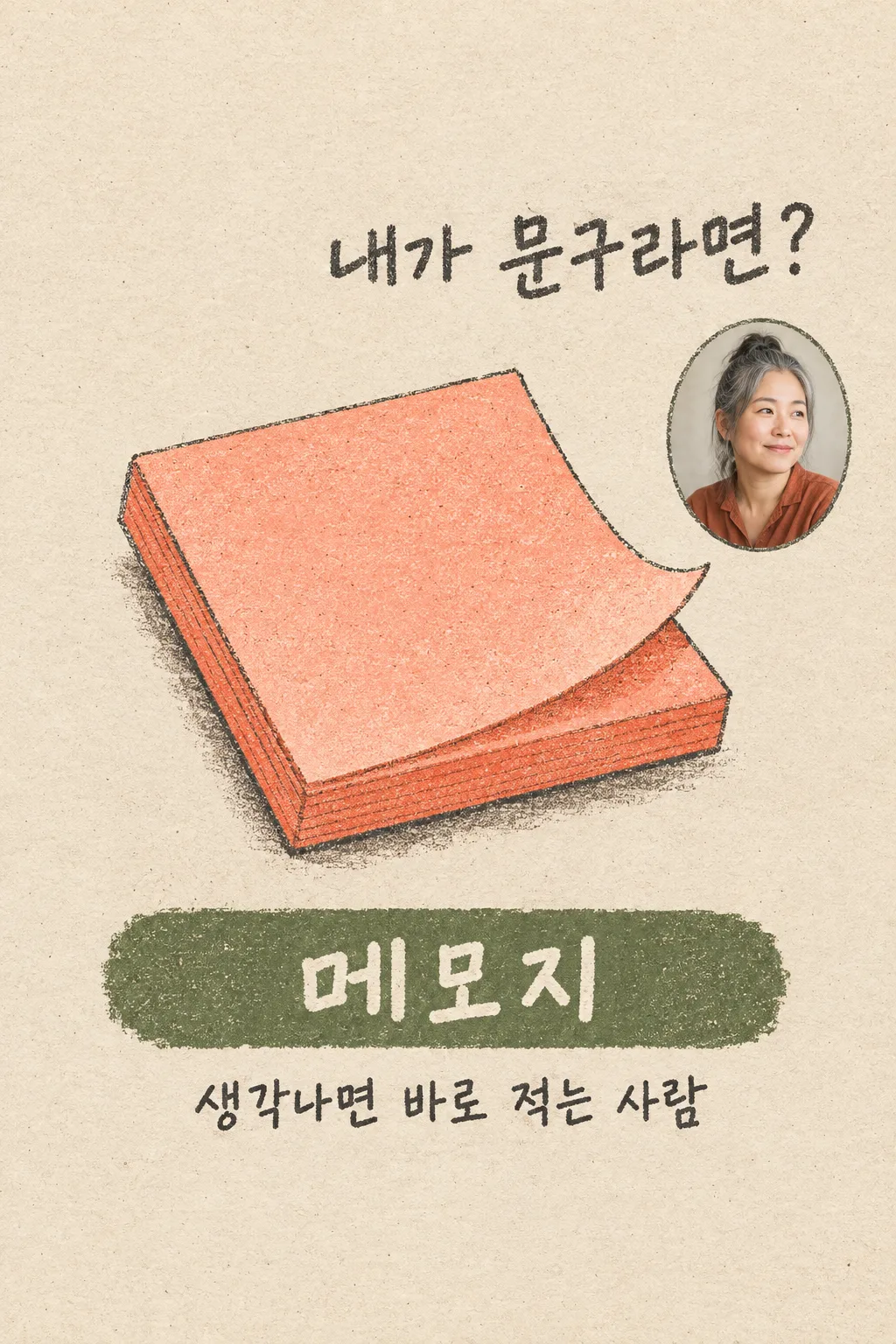
내 사진과 평소 습관을 문구 물건 하나에 빗대 인스타 스토리·스레드에 공유해요.
칸 채우기
- 1칸을 채워요
- 2복사 버튼을 눌러요
- 3GPT 채팅창에 내 얼굴 사진 1장을 올리고, 프롬프트를 같이 붙여넣어요
- 4내 얼굴 사진 1장과 프롬프트가 둘 다 들어간 걸 보고 보내요
프롬프트 원문 보기 5,219자
Generate this image now. Draw it directly - do not describe it, explain it, or ask questions.
Output one landscape A3 poster, 420 x 297 mm, aspect ratio 1.414:1. Use the largest supported image resolution. Final print target is 4961x3508 pixels at 300dpi; keep all lettering at least 10 mm inside every paper edge. Preserve the wide composition and print-safe margins.

[Purpose]
Create a playful personal introduction asking "내가 문구라면?". Turn the user's real self-described everyday habit into ONE stationery-object metaphor. This is a shareable visual joke, with a real portrait inset and a single illustrated answer. It is not a personality diagnosis or a product recommendation.

[Scene]
Read "【나의 습관】" and select one ordinary unbranded stationery item whose everyday use makes a natural metaphor: a memo pad, eraser, highlighter, paper clip or notebook. Choose from the words only, not the person's face. Draw just that object enlarged, at a gentle diagonal. Invent one short explanation of no more than eighteen Korean syllable blocks in the tone "【풀이 말투】". Use one familiar object name as the answer. No price, product model, measurement or psychological label.

[Attached photo]
Keep the actual attached face, hair, apparent age, skin tone and eyewear in a small oval photographic inset at x70-92%,y41-57%. It identifies the user only. It must remain photographic while the answer object is an illustration. Do not add a full-body person or infer identity from appearance.

[Text layout]
Render exactly "내가 문구라면?" in ONE modest charcoal hand-lettered line, total ink height no more than70pixels at1024pxwidth at x9-88%,y24-30%. The single large stationery object occupies x12-68%,y37-64%. Put its name in one moss-green horizontal answer band at y67-74%, and the concise pencil explanation at y78-83%. Do not label the input habit.
Optional personal name only: "【이름】" under the photo at y58-60%; omit this line when blank.

[Style]
Fixed two-ink vintage lithographic illustration on pale oat paper: charcoal grain, coral object accents, moss-green answer band. Uneven ink edges and tiny offset speckles look printed, not neon or glossy3D. All possible stationery answers retain this same medium and arrangement. Depict functional shapes correctly: attached memo sheets, a real clip bend, connected notebook spine or a solid eraser, without logos or readable packaging.

[Visual hierarchy]
Question clear but moderately sized, single object next, answer name large and immediately readable, comment quieter, photo small. The portrait must not compete with the answer. Keep all important text above the lower15% safe area.

[Lighting and texture]
Flat tactile printed pigment with a restrained drawn contact shadow. Preserve natural photographic texture in the inset. No desk photograph, catalog layout, stationery set, several candidates, elaborate ruled form or printed personality score.

[Text rules]
Use only the requested visible copy in the target language. Resolve an automatic-copy instruction into an original short line; never print the instruction itself. Preserve user-supplied names, spelling, numbers and punctuation. Input labels, section headings and placeholders are not visible copy. Every optional field stays on its own instruction line so that leaving it empty removes only that item. Never add a date, price, discount, quantity, prize, origin, business condition, scientific statistic or claim about a real person that the user did not provide. Personal inputs affect content only; keep this one art medium, one layout and one finished result type.

[Avoid and delivery]
Return exactly ONE complete raster image directly. All requested elements belong on the same canvas. Do not run code, provide an explanation instead of an image, create separate panels as separate files, require another message, offer variants, or ask the user to cut and assemble anything. No device mockup, promotional wrapper, brand logo, packaging imitation, existing fictional character, artist signature, celebrity or watermark. Finish the selected canvas edge to edge. Maintain the fixed composition when the selected aspect ratio changes by adapting spacing, without cutting important parts or adding a second result.

[Legibility]
Keep essential lettering inside x7-93% and y14-84% of the image. The upper12% and lower15% contain no important text. At a1024x1536 cover, all essential ink is below y215 and above y1290. Use clearly connected natural letters, comfortable spacing and strong contrast. Do not let faces, decorative marks, food highlights or shadows obscure the words. Large lettering must still identify this result in a three-column list. Handwritten copy is legible pencil handwriting, never tiny ornamental cursive.

[Strict bounding boxes for the complete picture]
The TOP15% is completely empty paper. The BOTTOM17% is completely empty paper. No lettering or ornament can enter these areas. Fit the ENTIRE question inside y24-30%, not just its baseline. Fit the ENTIRE illustrated object inside y36-62%; limit its height so it cannot push the answer downward. Fit the ENTIRE answer band inside y65-73%, and the ENTIRE comment lettering inside y77-82%. All three text blocks have a strict bottom edge before y82%. For1024x1536: title ink y369-460, object y553-952, answer ink y998-1121, comment ink y1183-1259. Keep all text well inside these boxes. Leave the lower277pixels blank. These generous margins are part of the finished result and not a cropping request.
이 카드도 많이 사용해요
쓰는 법 · 자주 묻는 것
친구에게 보여 줄 문구 비유
메모하는 버릇이나 틀리면 다시 시작하는 습관을 물건 하나로 보여 주는 자기소개 카드예요. 제목은 “내가 문구라면?”으로 고정되고, 가운데에는 문구 물건 하나, 옆에는 작은 내 사진, 아래에는 답 띠와 짧은 풀이가 들어갑니다. 인스타 스토리나 스레드에 한 장을 올려 친구는 어떤 물건으로 나오는지 함께 비교해 보세요. 실제 물건을 사라는 추천이 아니라 일상 습관에 빗댄 가벼운 놀이입니다.
얼굴보다 내가 쓴 습관이 답을 정해요
나의 습관에는 본인이 실제로 하는 일을 적으세요. 생각나면 적기, 중요한 곳에 표시하기, 작은 기록 모으기처럼 구체적인 행동 하나가 좋습니다. 보기에서 시작한 뒤 자기 말로 고쳐도 됩니다. 사진의 눈 모양이나 얼굴형으로 성격을 판단하지 않도록 했습니다. 풀이 말투는 같은 물건을 재치 있게, 다정하게, 담백하게 설명하는 차이입니다. 그림체나 결과의 배치는 바뀌지 않아요.
이름 없이도 완성돼요
이름은 선택 칸입니다. 별명을 짧게 넣을 수 있고 비워 두면 사진 아래 서명만 빠집니다. 생일, 직장, 주소나 연락처를 적을 필요는 없습니다. 원하는 문구 물건을 직접 고르는 칸은 두지 않았습니다. 사용자가 자기 습관을 입력하면 GPT가 어울리는 한 물건을 선택하는 것이 이 카드의 재미입니다. 실제 브랜드나 판매 가격은 들어가지 않습니다.
사진과 글을 한 번에 보내세요
본인 얼굴이 또렷한 사진 한 장을 GPT 입력창에 올리고 아직 보내지 마세요. 이 페이지에서 칸을 채운 프롬프트를 복사해 같은 입력창에 붙여넣으세요. 사진과 글이 둘 다 들어간 것을 보고 한 번 보내세요. 사진만 먼저 보냈다면 프롬프트 끝에 “위 사진으로 그려줘”를 붙입니다. 첫 요청에서 완성 이미지 한 장을 받도록 했으며, 코드 실행이나 여러 장 이어 받기, 잘라 붙이기는 필요하지 않습니다.
종이 질감과 작은 사진을 확인해요
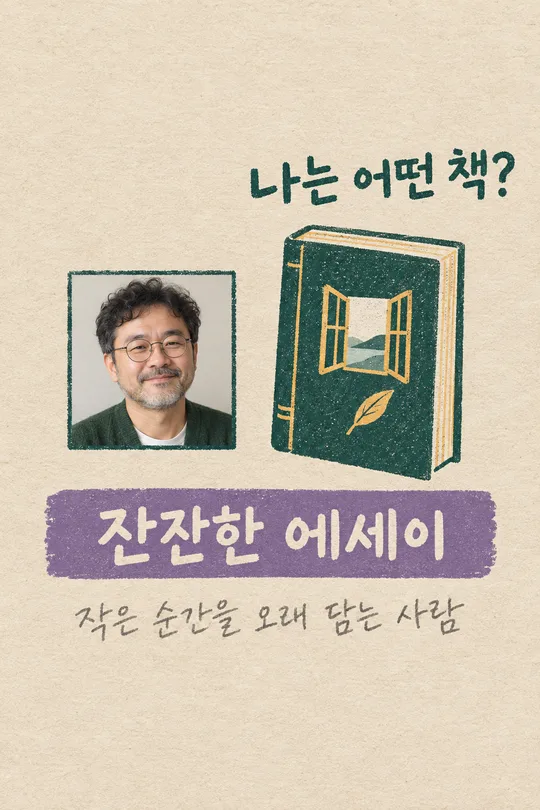
문구 물건은 산호색 잉크 결이 보이는 인쇄 그림이고, 얼굴만 작은 실제 사진으로 남아야 합니다. 글씨가 없는 소품을 크게 보여 주므로 목록에서도 무슨 물건인지 알아보기 쉬워요. 질문과 답 띠의 글자가 정확한지, 실제 입력 습관과 풀이가 잘 이어지는지 보세요. 물건 여러 개가 한꺼번에 나오거나 얼굴이 전신 캐릭터로 바뀌면 이 카드의 결과와 달라진 것입니다. 표지의 사람과 답은 가상 예시이며 사용자의 실제 결과는 달라집니다.
틀린 곳만 정확히 고쳐요
풀이가 어색하면 나의 습관을 더 구체적으로 적고 전체 프롬프트를 보내 보세요. 글자 오류가 나면 바꿀 문장을 따옴표로 정확히 지정합니다. 작은 사진이 너무 커졌다면 오른쪽 타원 안에만 두라고 고쳐 주세요. 이런 요청은 실패한 결과의 보완이며 정상 사용에 두 번째 요청을 요구하지 않습니다.
자주 묻는 것
- 얼굴로 성격을 판정하나요? 아니요. 답은 사용자가 직접 적은 습관에서 고르는 비유입니다.
- 문구 쇼핑 추천인가요? 아니요. 상품명이나 가격 없이 나를 소개하는 공유 이미지입니다.
- 한 장 안에 여러 후보가 나오나요? 물건 하나와 답 하나만 나옵니다.
- 무료 GPT 화면에서 시험했나요? 지정 이미지 API로 표지를 확인했습니다. 무료 GPT 화면의 실제 생성 시험은 하지 않았습니다.