

All · Infographics & guides · Steps & processes
481How Things Are Made
Follow raw materials through a miniature production line to the finished object in one readable infographic.
Fill in the fields
- 1Fill in the fields
- 2Copy the prompt
- 3Paste it into a GPT chat
- 4Send it as is and you get an image like the thumbnail example
- 5Attach a real photo that fits the card and it is used in the result: a background photo for background cards, a person or food photo for those cards Optional
Full prompt 3,569 characters
Create exactly ONE finished educational manufacturing-process infographic as an original miniature production line, directly as an image. Output size 1920x1080 pixels, 16:9 landscape thumbnail. Keep all text large and readable at thumbnail size.
Subject: 【Subject】. Stage count: 【Stage count】. Mood: 【Mood】.
Use paper from prepared pulp, five stages, and 3D miniature when respective inputs are blank or automatic. Use exactly the selected number of numbered stages, strictly LEFT TO RIGHT in a single connected production row. For another aspect ratio, compress the connected row without reversing or wrapping the reading order. Title and stage labels must remain readable. Fill the canvas with the workshop, machinery, materials and finished objects; no floating sheet, collage, device mockup or promotional cover.
Before drawing, verify the process with reliable manufacturer, industry or museum sources if web access is available. Use only well-established steps. Choose a specific common manufacturing method, not a mixture of incompatible methods. Stage count 4, 5 or 6 means combine adjacent real operations into broader stages or separate a real combined operation; never invent an operation to fill a count. If a requested process cannot be established, do not fabricate an infographic: request the verified process instead. Do not print research notes, uncertainty disclaimers, citations or source logos in the image. Do not invent temperatures, times, ingredient percentages, health claims or historical facts.
Paper from prepared pulp: disperse pulp in water, form and drain a sheet on mesh, press out water, dry on heated cylinders, reel and cut. Glazed ceramics using two firings: knead clay, form, dry fully, bisque fire, apply glaze, glaze fire. Wooden graphite pencils: make graphite-clay cores, groove slats, insert cores and glue another slat on top, cut and shape pencils, paint and dry. Glass bottles: mix established glass raw materials, melt, form in molds, gradually cool in an annealing lehr, inspect. These are alternate subjects, not additional lines to draw.
Render only ONE selected mood across the whole image: 3D miniature means tactile scale-model machinery with studio light; Watercolor means transparent pigment washes and delicate ink on textured paper; Retro means vintage technical gouache, restrained screenprint grain and ochre/teal/vermilion inks. Keep the same readable miniature assembly-line composition in every mood. Add purposeful pipes, bins, catwalks and tools, with enough space behind lettering. Show changes in material state and the finished object on the right. Arrows, if used, must all follow the production flow.
Write one large natural English title meaning '[subject] is made', the small editorial name 'Haru', and exactly 【Stage count】 short English stage labels numbered consecutively from 1. No other text. Never print field names, automatic choices or instructions. Proofread each character and count every station. Use original generic fictional designs, plain unbranded objects and no people, real brands, logos, recognizable proprietary products, copyrighted characters, signatures or watermarks. The image must require no later cropping, assembly or retouching. Return only the finished single image.
Automatic choice: Choose for me.

[Final output format]
Output size 1920x1080 pixels, 16:9 landscape thumbnail. Keep all text large and readable at thumbnail size.
This selected output format takes priority over any fixed canvas size or aspect ratio elsewhere in this template. Adapt the composition, text zones and margins to the selected canvas without stretching or cropping essential content. Device safe areas apply only when a device is selected. Never print these format instructions on the image.
How did it turn out?
You may also like
How to use it · FAQ
A miniature factory you can read at a glance
Use this card for classroom slides, workshop introductions or educational posts about how a familiar object is made. One connected miniature production line takes the reader from materials on the left to the finished object on the right. It creates an original fictional workshop without needing an uploaded photo. The default output is one 16:9 infographic; the separate portrait listing cover shows paper manufacturing.
Fill the three required fields
Subject sets both the object and the manufacturing method. “Paper from prepared pulp” is more precise than “paper”; “twice-fired glazed ceramics” avoids mixing different firing methods. Choose for me or an empty subject defaults to paper from prepared pulp. Stage count offers 4, 5 or 6 and defaults to 5. Adjacent real operations are grouped when fewer stages are selected; real combined operations can be separated for more stages. No invented operation should be added just to reach a number. Mood offers 3D miniature, Watercolor or Retro, defaulting to 3D miniature. Use the shared size selector for the image ratio.
What the gallery demonstrates
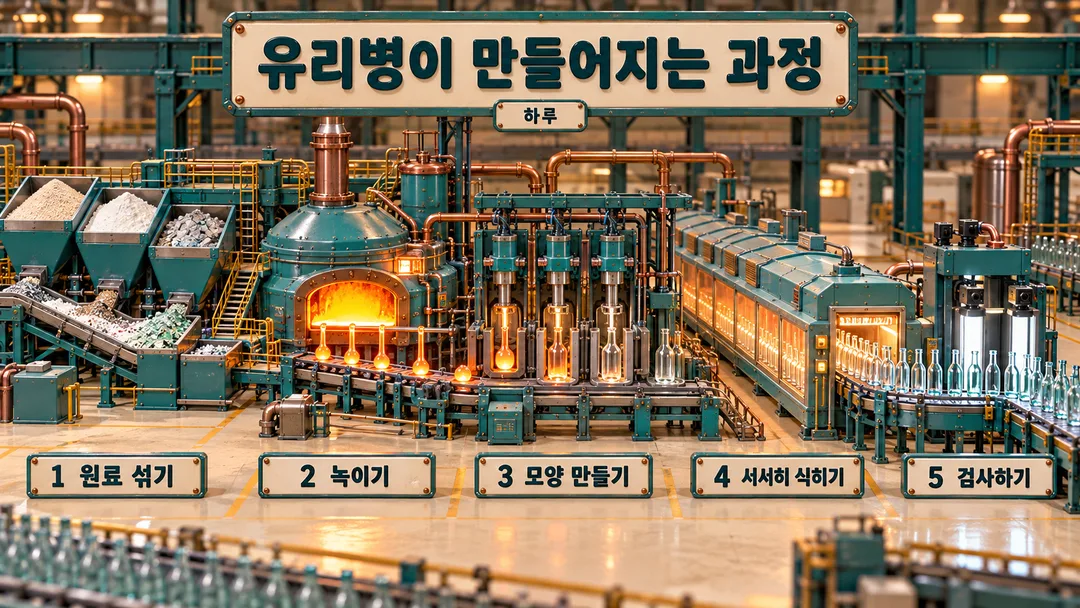
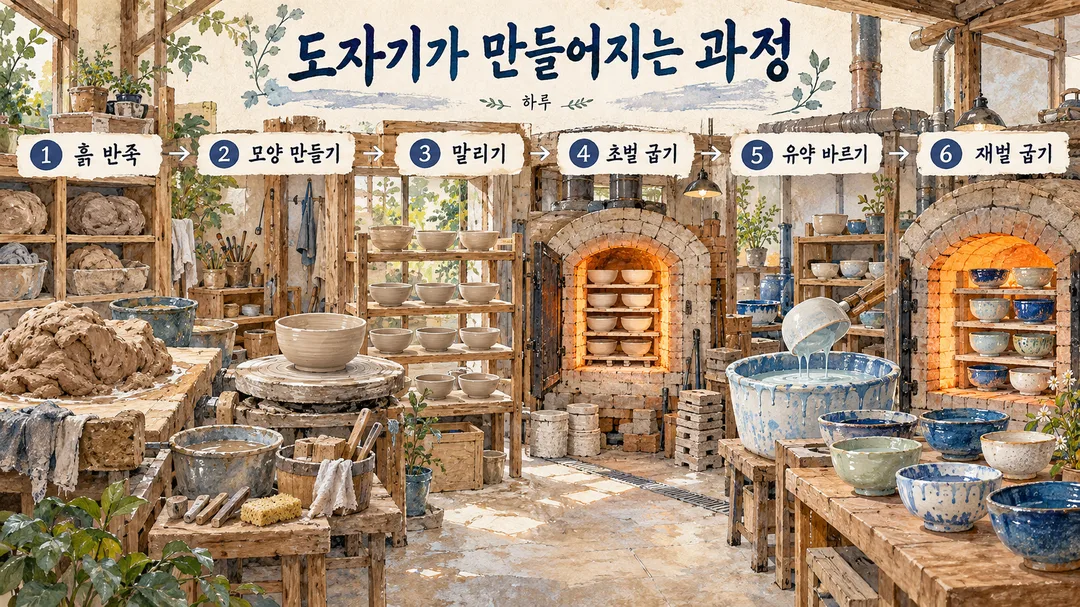
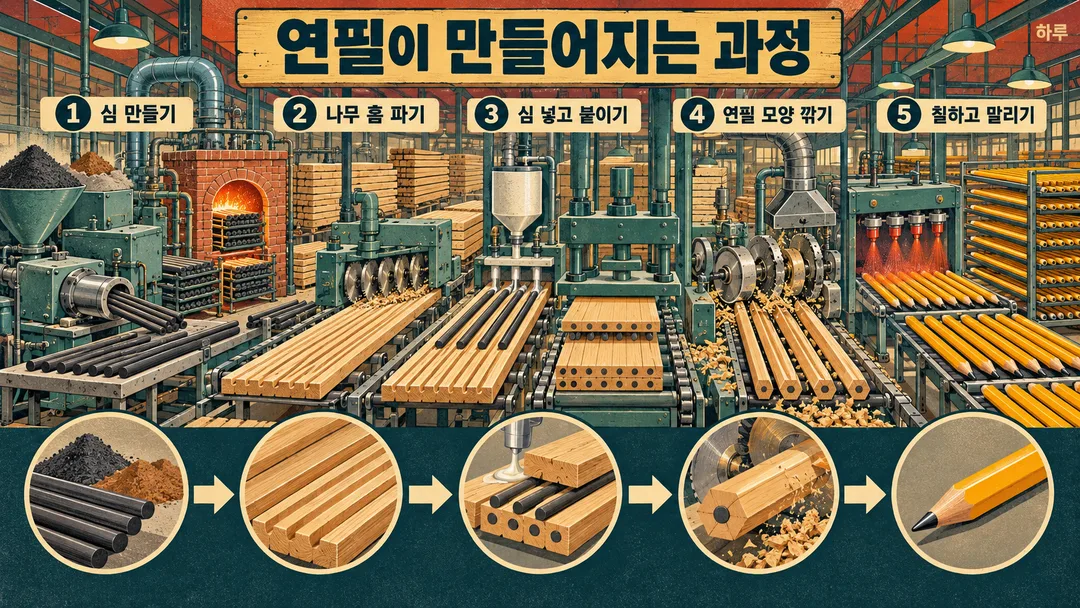
The 3D glass-bottle line has five stages: mixing raw materials, melting, forming, gradual annealing and inspection. Watercolor ceramics uses six: kneading, shaping, drying, bisque firing, glazing and glaze firing. Retro pencils uses five broad stages covering cores, grooved wooden slats, assembly, shaping and paint with drying. The small editorial name is Haru. These are separate results with different subjects and moods, not repeated copies of one image.
Generate and check
Paste the completed prompt into an image AI once. You should receive one finished image without running code or assembling panels. Count the numbered stations and read every label enlarged. Check that the material actually changes in the right order: clay must dry before bisque firing; wooden pencils contain graphite-based cores rather than metal lead; glass bottles cool gradually in an annealing lehr. Do not accept a water-quenching scene for this bottle process. If lettering is wrong, specify the correct word and regenerate the complete image.
Questions
Can I use another product? Narrow it to a well-established manufacturing method and supply a verified sequence when necessary. The prompt asks for reliable process verification where browsing is available and asks for confirmed steps rather than fabricated details when the process cannot be established. Can I add a long essay? This layout is intended for short stage names and visual flow. It is an educational overview, not a factory engineering drawing or an operational safety manual. External image services have their own terms and pricing.