

All · Wallpapers · Cinematic
131My Photo Film Title Wallpaper
Turn a portrait into a film still with a pencil name on a projection cloth inside a dusk railway platform.
What you get
- One cinematic phone wallpaper with a pencil name on an illuminated cloth
- A horizontal or vertical title screen that changes the portrait composition
- A personal memory object inside a distant train window
ChatGPT Free OK
Fill in the fields
- 1Fill in the fields
- 2Copy the prompt
- 3Paste it into a GPT chat
- 4Send it as is and you get an image like the thumbnail example
- 5Attach One portrait photo; without a photo, a fictional adult is generated with the prompt and your photo is used in the result Optional
Full prompt 3,167 characters
Create a finished cinematic phone wallpaper, a single portrait 9:16 image. The film's title is the owner's name, written with dark graphite pencil on a luminous projection cloth inside a railway-platform scene. Render the image directly.
Output size 1080x1920 pixels, 9:16 portrait story. Keep all text inside the central 80% of the height.

CAST: 【Face cues】. An attached portrait is the identity reference: retain its facial proportions, hair, eyewear and clothing. These clues must not override the photograph. Without an attachment, cast a fictional adult matching the clues and complete the wallpaper without a question.
NAME: 【Title name】. Spell this exact name once, using large hand-sketched pencil strokes with dry graphite edges and varied pressure. No other visible writing.
WINDOW MEMORY: 【Memory in the train window】. Show this small still-life through a distant warm-lit train window. It is a personal story detail, never a caption or a second portrait.
SCREEN DIRECTION: 【Screen direction】.

The title carrier is an actual pale matte cloth hung on the empty platform, with a visible hem and subtle cloth texture, illuminated as if by an unseen projector. It belongs to the photographed space, with perspective and a faint shadow; it is not a graphic banner, speech bubble, filmstrip or pasted paper. Keep the face separate from the cloth.
For Horizontal screen: suspend a broad landscape cloth below the person's shoulders across the lower-middle scene; the person is waist-up above it, left of center. Write the name left-to-right as one horizontal title on that cloth. Its bottom hem remains above the wallpaper's dark bottom margin.
For Vertical screen: replace that horizontal cloth entirely with a tall narrow cloth hanging at the RIGHT of the person, starting beside their shoulder and ending above the bottom margin. Recompose the person to the LEFT. Stack the name's letters from top to bottom down this cloth, with generous space between characters. The blank sky must continue above both. The cloth's silhouette and the reading direction must visibly change, not just its tint.

Photograph an invented elevated platform at blue hour, curved rail lines receding behind the adult, silver-blue air, teal shadows and muted amber window glow. Keep the scene grounded in analog film photography with fine grain, gentle bloom, believable skin and cloth, ordinary unbranded clothes. One person only. The memory object stays inside the train window, outside the cloth.
Reserve the upper quarter for the real lock-screen clock: quiet dark blue sky, no face, cloth or lettering there. Reserve a dark quiet strip along the bottom for real phone controls. Supply the wallpaper itself, without a drawn clock, handset, credits, release line, station lettering, watermark, famous character or existing film reference. The name on the projection cloth is the sole title and sole text.

[Final output format]
Output size 1080x1920 pixels, 9:16 portrait story. Keep all text inside the central 80% of the height.
This selected output format takes priority over any fixed canvas size or aspect ratio elsewhere in this template. Adapt the composition, text zones and margins to the selected canvas without stretching or cropping essential content. Device safe areas apply only when a device is selected. Never print these format instructions on the image.
How did it turn out?
More cards in this category



How to use it · FAQ
The cloth still shows beneath the pencil
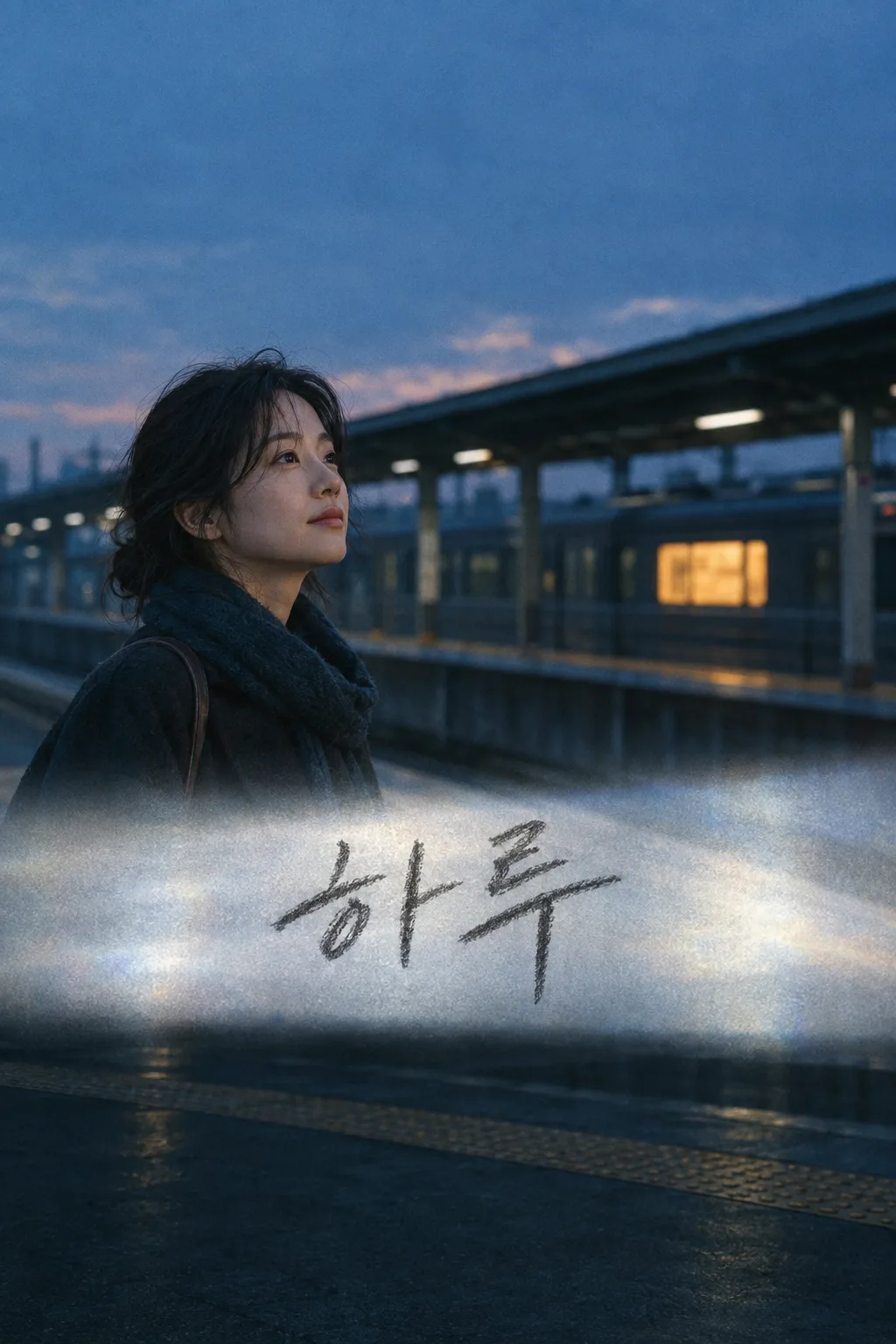
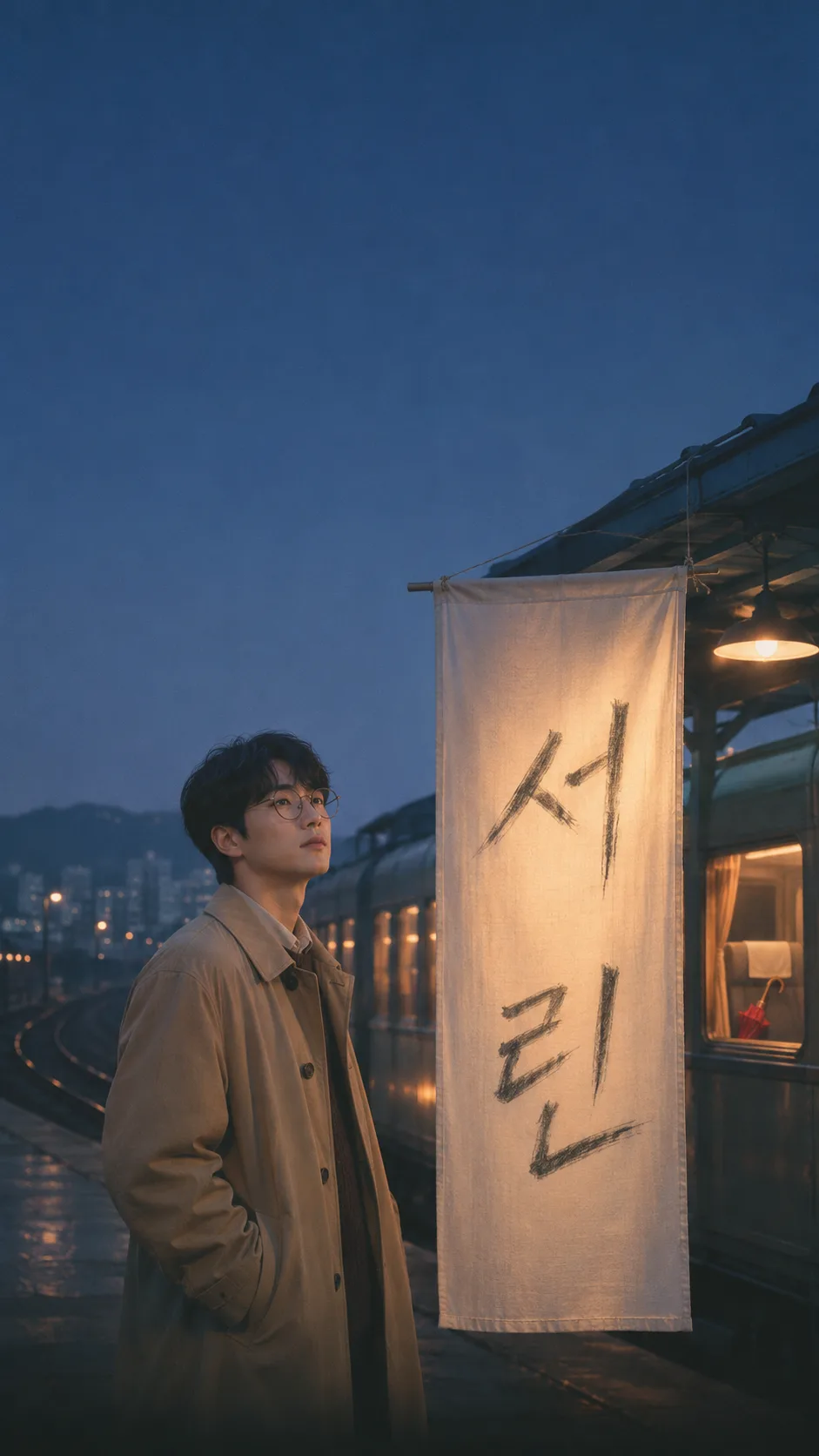
Both runs with the same examples placed “Seorin” as a horizontal pencil title on a bright cloth below the face. Creases and stitched edges remained visible beneath the strokes. The name had an object to live on inside the platform scene. A folded red umbrella also appeared in the train window. These image tests used a short Korean name; the English lettering has not been tested.
A vertical screen changes the reading path
Changing only Screen direction replaced the wide cloth with a tall narrow one to the person's right. The name ran from top to bottom, and more of the coat became visible on the left. Teal dusk and amber windows remained, while the title and portrait occupied different shapes. A horizontal screen leads the eye from face to title below; a vertical screen places the title alongside the face.
The umbrella stayed in the window, but turned upright
The umbrella lay on the seat in both horizontal versions and stood by the window in the vertical version. If its precise position matters to a memory, inspect that detail. A recognizable object such as a folded red umbrella works as a small story clue without becoming another caption.
All three images left quiet sky at the top and dark space at the bottom. The vertical cloth began above shoulder level, though, and the portrait changed scale. If the screen covers the face or enters the clock area, a follow-up could say, “Move the cloth and name down together and leave the face visible.” That follow-up has not been tested.
These were fictional adults generated without an attached photo. Photo likeness, a real phone clock, English and Japanese title layouts, and long names remain untested. Try a short nickname first if a vertical title feels cramped.
Last checked · Published