

019残り食材で作る毎日の献立表
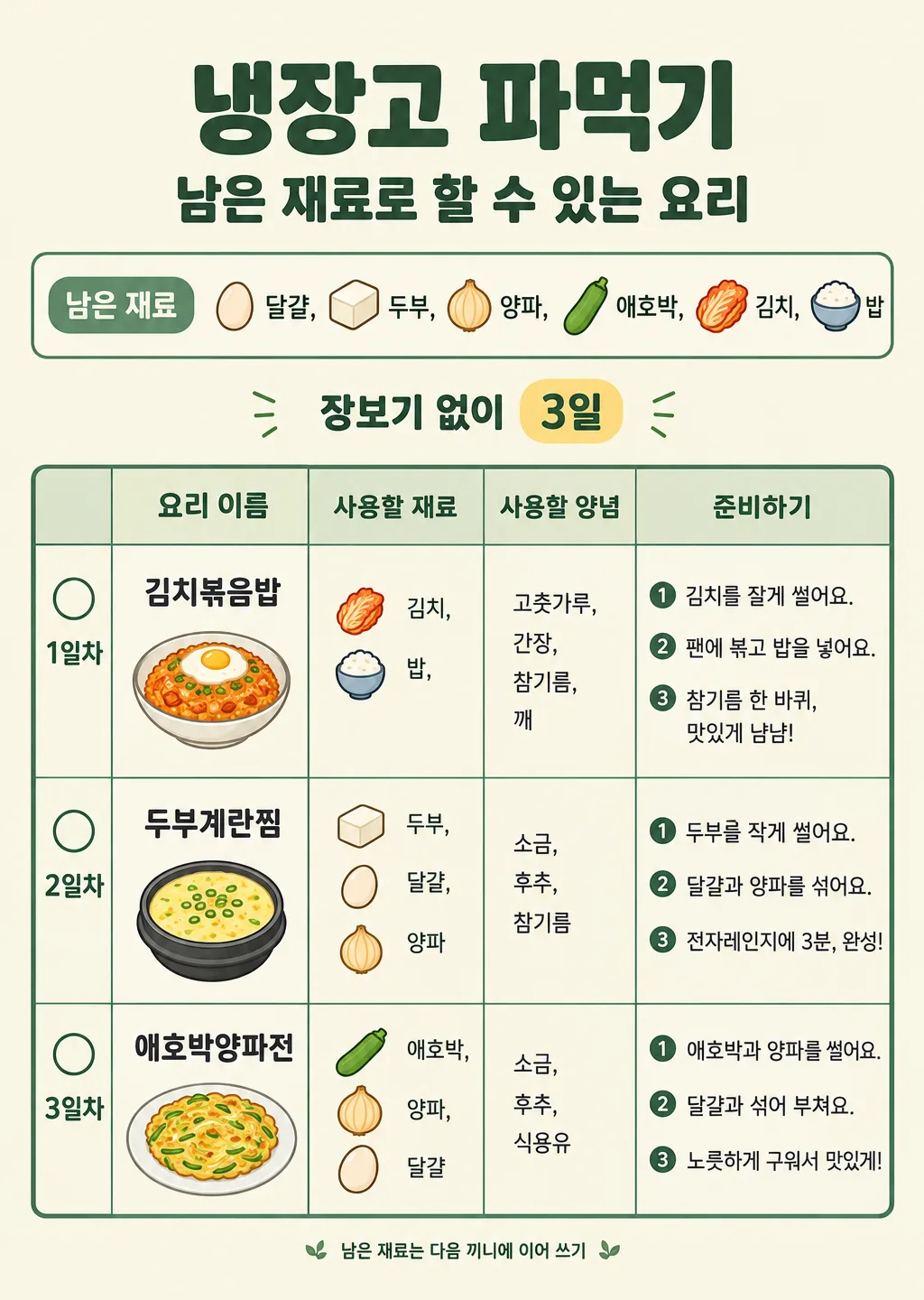
残り食材を使い、毎日の一品と調味料、3つの調理手順をまとめます。
ChatGPT 無料 OK
項目を入力
- 1項目を入力します
- 2コピーを押します
- 3GPTのチャットに貼り付けます
- 4そのまま送ると、サムネイルの例のような画像になります
- 5カードに合う実際の写真を一緒に入れると反映されます。背景カードなら背景の写真、人物・料理カードならその写真 任意
プロンプト全文を見る 6,787文字
Before drawing, if web search is available, look up real Korean home dishes that can be made from the ingredients in "【残り食材】", and choose each day's dish from what you found. Then generate the image directly - do not describe the search, explain it, or ask questions.
出力サイズは2480×3508ピクセル、A4縦、300dpiの印刷用ポスターにしてください。

[Printable table rules]
Use text only: no food pictures, ingredient pictures, decorative icons, or photographs. Reserve at least 45% of the table width for the cooking steps. Each numbered step occupies exactly one line; use at most 20 characters including spaces in Korean or Japanese, or 36 characters in English. Use one action per step, compact wording, and a brief cheerful ending on step three. Never wrap a step onto a second line. Keep the title inside its specified vertical zone.

[Purpose]
Create one complete Korean refrigerator clean-out cooking plan for the supplied number of people (one person if absent), practical enough to print and tape to a refrigerator door. It recommends one dish per day for the period "【日数】", using up the leftover ingredients "【残り食材】". For each day it shows the dish name, the ingredients it uses, the seasonings it uses, and three short friendly cooking steps. Do not create a shopping list and do not tell the user to buy anything.

[Ingredients and seasonings]
- Main ingredients come only from "【残り食材】". Never add a main ingredient that is not in that list (no extra meat, vegetables, eggs, noodles, cheese, and so on). If the list is short, repeat a valid combination or make a simpler dish instead of inventing food.
- Seasonings may come from ordinary Korean home pantry basics: 塩、こしょう、しょうゆ、砂糖、食用油、ごま油、えごま油、粉唐辛子、コチュジャン、テンジャン、刻みニンニク、酢、ごま. Use only the few that the dish really needs.
- Use ingredients that spoil sooner on earlier days. Each day uses only the two to four ingredients that dish really needs — never the whole list — and different days use different combinations.

[Scene]
A clean flat printable sheet only — no refrigerator mockup, room, hands, magnets, food photography, or brand marks. A title area, a compact strip showing the leftover ingredients, and a large table below with exactly one row per day of the period (for example, 3日間 means three rows and 5日間 means five rows). A small check circle at the left of each row so the printed sheet can be marked with a pen. Use text labels only in the ingredient strip and table.

[Text layout]
Render these Japanese strings. The percentages describe the top-to-bottom structure; adapt spacing to the canvas size while keeping the reading order and the full table.
- 4-9%: the fixed title "冷蔵庫の食材を使い切ろう" as the largest text, with the fixed subtitle "残り食材で作れる料理" beneath it in a smaller bold style.
- 11-17%: a bordered strip with the fixed label "残り食材" followed by the exact string "【残り食材】".
- 19-22%: the exact period "【日数】" in a small badge beside the fixed text "買い物なしで".
- 24-92%: the table. A header row with exactly these four column titles: "料理名", "使う食材", "使う調味料", "作り方". Then one row per day labeled "1日目", "2日目", and onward in order.
  - 料理名: a real, specific Korean dish name in bold.
  - 使う食材: only the ingredients from the list that this dish uses.
  - 使う調味料: only the pantry seasonings this dish uses; write "なし" if none.
  - 作り方: exactly three numbered short steps "①", "②", "③", in warm, friendly spoken Japanese like a friend explaining — each step one short line with a simple time or amount where useful. Example of the tone: "① まず肉を炒めます" / "② 2分後に野菜を入れます" / "③ ごま油を二回くるっと、いただきます". The last step should end on a cheerful note, varied from day to day.
- 95-98%: the fixed footer "残った食材は次の食事に使おう" in small text.

[Style]
A calm, highly legible Korean household-planner style: warm off-white paper, deep charcoal Japanese bold sans-serif lettering, muted leaf-green table lines, and one pale-yellow accent for the period badge. Thin grid lines, rounded corners, generous padding, and check circles suitable for marking with a pen. Fill the canvas edge to edge with an opaque warm neutral background. When many rows are needed, reduce padding and icons before reducing text size; the 作り方 steps must stay readable on a printed page.

[Lighting and texture]
Flat even color with a subtle matte paper feel. No realistic lighting, reflections, gradients behind text, or depth effects. It must print cleanly on an ordinary home printer.

[Text rules]
Write all displayed content in Japanese, except numerals. Preserve "【残り食材】" and "【日数】" exactly. Do not print field names, braces, instructions, or text outside Japanese. Before drawing, check every dish and every "使う食材" cell against the list: a main ingredient that is not in "【残り食材】" must be removed. Check every letter and glyph, comma, circled number, and day number for accuracy.

[Avoid]
No shopping list, recommended purchase, substitution, optional topping, nutrition score, calorie number, health or diet claim, price, delivery-app logo, food brand, trademark, character, watermark, QR code, or social-media handle. No dish that needs a main ingredient absent from the list. No whole ingredient list repeated in every row. No long paragraphs in 作り方 — three short steps only. No photorealistic food, collage, stickers over text, empty placeholder boxes, illegible handwriting, neon, lens flare, heavy shadow, or clipped rows.

[MORE OWNER INPUT — each line exists only when supplied; treat "選ばない" as absent]
PEOPLE: "【人数】". Show this number beside the period badge. In every ingredients cell, give a practical amount for each ingredient, scaled to this number. Use household counts and cups only, such as 個, 丁, 杯, カップ; do not use gram weights, Latin unit symbols, or parenthesized conversions. Use equivalent words in the output language.
TIME: "【調理時間】". Every dish fits this time. Put its total preparation-and-cooking minutes directly below each dish name, in the output language; calculate the total before drawing as all sequential step times plus five minutes for preparation. Choose dishes whose calculated total fits the supplied limit; print that calculated total without rounding down. A sequence of 3, 5, and 3 minutes therefore requires 16 minutes including preparation, never 5 minutes.
AVOID: "【食べられないもの】". Never use these ingredients; mark the plan as free of them.
TOOLS: "【調理道具】". Use only these tools.
Keep every added line smaller than the main message; never let added text crowd the hero or shrink the main title. Supplied texts stay exact.

[Final output format]
出力サイズは2480×3508ピクセル、A4縦、300dpiの印刷用ポスターにしてください。
This selected output format takes priority over any fixed canvas size or aspect ratio elsewhere in this template. Adapt the composition, text zones and margins to the selected canvas without stretching or cropping essential content. Device safe areas apply only when a device is selected. Never print these format instructions on the image.
結果はどうでしたか?
同じ分類のほかのカード

使い方・よくある質問
卵や豆腐、使いかけの野菜など、冷蔵庫の半端な食材を使い切るための献立表を作ります。残り食材をカンマ区切りで入力し、日数を選ぶだけで、買い物なしで作れる毎日の料理名、材料、調味料、3つの短い調理手順を一枚にまとめてくれます。傷みやすい食材から順に使うよう工夫されています。
「残り食材」欄に「卵、豆腐、玉ねぎ、ズッキーニ、キムチ、ご飯」のように具体的に入力します。「日数」欄で3日や5日などの期間を選びます。冷蔵庫に貼る場合はA4サイズが最適です。
生成された画像を確認し、入力していない肉や野菜が勝手に追加されていないか、調理手順が分かりやすく3段階になっているかをチェックしてください。
指定外の食材が含まれている場合は、「2日目にリストにない食材が入っています。入力した食材だけで別の料理を提案してください」と修正を指示してください。
家庭の事情に合わせる項目
以下はすべて任意です。空欄にするか「選ばない」を押すと、基本の項目だけで作ります。
- 人数: 選んだ人数に合わせて分量を調整します。食材が少ないのに人数を多くすると、同じ料理が続きやすくなります。
- 調理時間: すべての料理をその時間内に作れるものにし、各行に所要時間を書きます。平日の夕食なら「20分以内」が無理のない目安です。
- 食べられないもの: 入力した食材は使わず、表に除いたことを示します。アレルギーがある場合は、表の材料と調味料を必ず自分でも確認してください。合わせ調味料に含まれていることもあります。
- 調理道具: 入力した道具だけで作れる料理を選びます。鍋ひとつしかないなら「鍋ひとつ」と書いてください。
最終確認日 · 公開