
項目を入力
- 1項目を入力します
- 2プロンプトをコピーします
- 3GPTのチャットに自分の部屋写真一枚とプロンプトを一緒に送ります
- 4写真と文章の両方が入っていることを確認します
プロンプト全文を見る 5,595文字
Generate this image now. Draw it directly - do not describe it, explain it, or ask questions.
A3横、420×297mm、縦横比1.414:1のポスターを1枚作成してください。生成できる最大解像度を使い、印刷用の最終目標は4961×3508ピクセル、300dpiです。文字は紙の端から10mm以上内側に置いてください。

[Purpose]
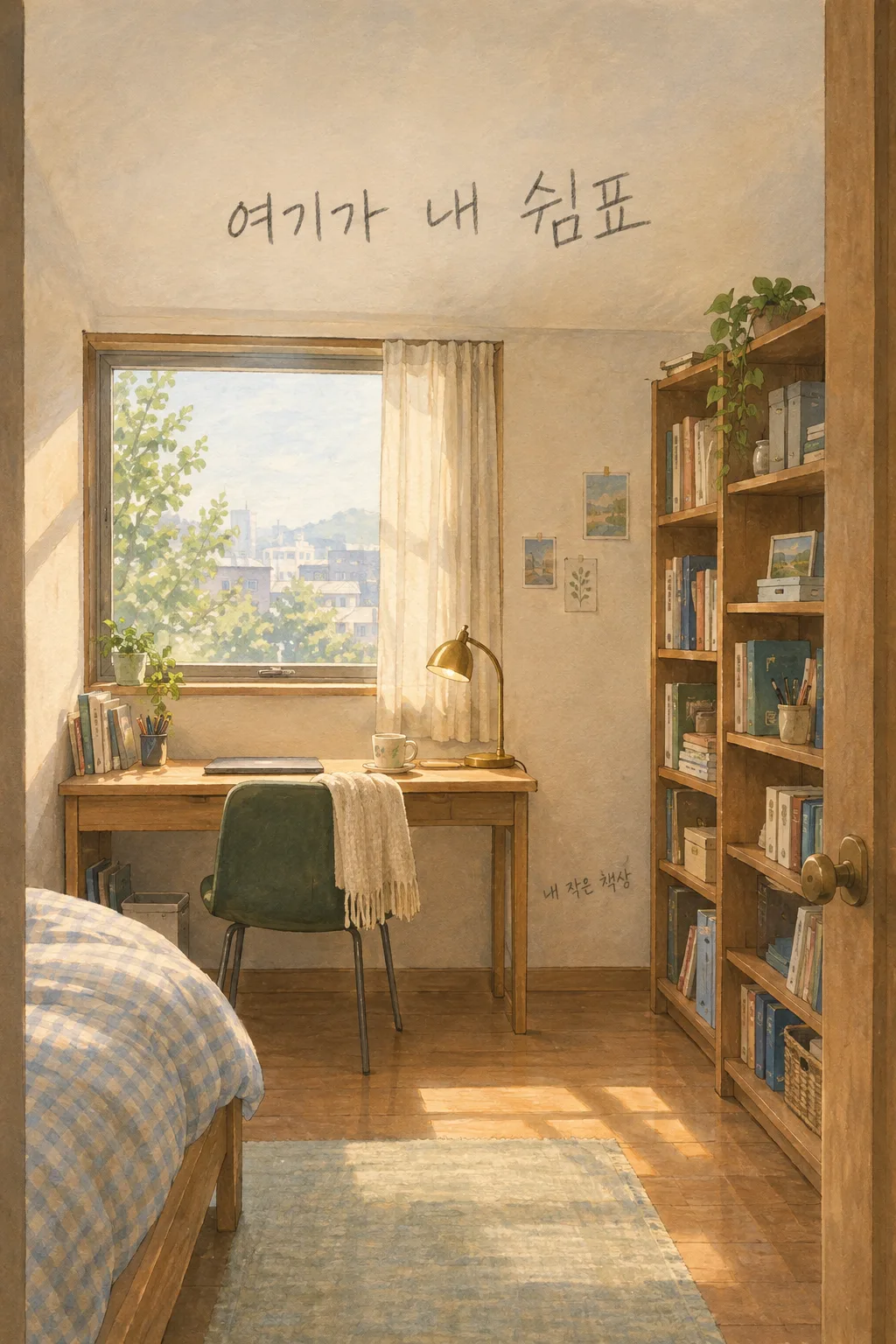
Turn the user's actual room photograph into ONE finished hand-painted daily-life anime interior illustration for social sharing. Preserve the recognizable personal space as a quiet visual record, with one large pencil-written memory line. The output is a single inhabited-feeling room scene without a human figure, original photo inset, collage or comic panels. It is not an interior redesign or a shopping plan.

[Scene]
Use the room visible in the photograph as the whole scene. Maintain its major wall, window, desk, bed, shelving and door relationships, and keep the same one-point or gentle two-point perspective. Only show the photographed room, not a new apartment or additional room. The remembered event is "【残したい出来事】"; use it to inform the short line, not to add celebration props, food, furniture or a fabricated date. Keep the feeling warm and lived-in through painterly edges and soft light on the existing objects. Do not introduce a person, pet, magical portal or a location label suggesting the room is in a specific city.

[Attached photo]
One actual room photograph is REQUIRED. Preserve the user's visible furniture, personal object clusters and distinctive window shape. Simplify tiny lettering on book spines or packaging into unobtrusive marks rather than inventing readable titles, addresses, logos or labels. Do not move the door, replace the bed with a different furnishing, add a television, change the floor plan or invent a view outside the window. Retain visible outside scenery softly without making up a famous landmark. Reinterpret colors and texture in the fixed illustration medium while keeping the user's place identifiable.

[Text layout]
All visible text is in Japanese. The memory line is "【鉛筆の一言】". If it is "おまかせで選んで", invent one gentle original sentence of at most twelve Korean/Japanese characters or five English words, based on the remembered event. Never print the automatic control or invent a date. Place the line in large readable soft graphite handwriting between13-20% height on a quiet wall or sky patch already present in the composition. Maintain at least7% side margins and a contrast gap around the letters. The room scene extends beneath it, with the main window and furnishings between25-100% height. Do not frame the art as a physical postcard or add a decorative text plaque. The entire top12% and bottom15% are free of essential text.
If provided, write "【部屋の呼び名】" once as a small pencil memory signature at64-68% height, on an unbusy surface. When this instruction is absent, do not invent a room name or add an empty label.

[Style]
One fixed nostalgic Japanese daily-life animation-background style: hand-painted gouache washes, gentle original contour drawing, muted ochre, moss, cream and gray-blue accents, modest brush grain and calm window light. No named artist, franchise or recognizable film scene is referenced. Objects have believable proportions and coherent perspective. This is full-scene environment art rather than a sketchbook containing an original photo above a drawing, a floor-plan diagram or a tiny3D dollhouse.

[Visual hierarchy]
The room's familiar window and furniture arrangement lead the eye into the image, and the large pencil line gives it a personal reason to share. Keep the text readable at list size without covering the room's distinctive details. Use painterly atmosphere rather than adding stock nostalgic props. Preserve one continuous composition from edge to edge, with no blank margin frame, split-screen comparison, decorative stamps, stickers, arrows or fabricated social metrics. A different canvas ratio fits this same room scene and text order; it never introduces another view or output type.

[Lighting and texture]
Use soft warm window illumination consistent with the photograph's visible window, with gentle grounded shadows and restrained highlights. Painted curtains, wood and cloth should retain their material character. Avoid orange fog covering every surface, glowing outlines, mirrored duplicate furniture, floating lamps, lattice-like repeated objects and implausibly stretched chair legs. Artwork fills the canvas directly; the room is depicted as art, not as a photo of an illustration hanging inside another room.

[Text rules]
All quoted visible copy belongs to the artwork, while input labels and instruction headings do not. Resolve any automatic wording control into a short original sentence before drawing; never print that control literally. Preserve provided spelling and numbers, and use the target language consistently. Keep readable letters separate from highlights, folds, shadows and decorative marks. Do not invent a price, discount, date, availability, award, endorsement, biography or purchasing condition. The fixed composition and medium stay the same for every user; personal inputs change its content only.

[Avoid and final delivery]
Deliver exactly ONE finished raster image in this response. Draw it directly with image generation. Do not execute code, give drawing instructions instead of an image, offer multiple versions, create separate pages, ask for a next message, or require cropping and assembly. No phone mockup, browser frame, watermark, publisher logo, branded packaging, existing character or celebrity likeness. Finish all artwork within the selected aspect ratio, preserving the composition and large readable lettering. Leave the upper 12% and lower 15% free of essential lettering and maintain generous side margins.
こちらのカードも人気です
使い方・よくある質問
こんなときに使えます
自分の部屋や作業スペースを、写真とは違う雰囲気で記録したいときに使えます。実際の一枚を、日常アニメの手描き背景のような風景へ変えます。家具と窓の関係を残し、思い出を表す大きな鉛筆文字を一行添えます。引っ越し初日、机を片付けた日、長く住んだ部屋を離れる前など、空間そのものを思い出としてSNSに載せられます。元写真と絵を上下に並べる絵日記とは違い、部屋全体が完成したイラスト一枚です。
入力欄の使い方
残したい出来事には、その場所での実際の記憶を短く書いてください。「引っ越し初日」「机を片付けた日」「久しぶりに休む夜」などです。文を考える材料であり、写真にない家具やお祝いの小物を追加する指示ではありません。一言は自分で書くか「おまかせで選んで」を選べます。部屋の呼び名は任意です。普段使う「私の小さな机」「わが家」などを入れ、不要なら空欄にします。住所や都市を当てて表示するカードではありません。
自分の空間の写真を一枚使います
窓と家具の配置が一緒に見える写真が向いています。机だけの接写では部屋全体の構造はわからないため、見える範囲だけを描きます。複数の部屋を合成したものより、一つの空間を一つの視点から撮った写真を選んでください。GPTへ添付してまだ送らず、同じメッセージにプロンプトを貼り付けます。写真と文章を確認して一度送信してください。先に写真を送った場合は「上の写真を使って描いて」と最後に添えられます。コードの実行や部分ごとの生成は不要です。
完成後に確認すること
まず、自分の部屋とわかるかを見てください。窓の位置と形、机とベッドの関係、見慣れた物のまとまりを保つ必要があります。同じ椅子が複製されたり、床と家具の脚がつながらない場合は修正します。写真にないテレビや、扉の外の新しい部屋を足すのも目的と違います。淡いガッシュや柔らかい線へ変わっても、実際の空間のつながりは残します。本の細かい文字は、勝手な書名を作るより静かな色と線に単純化します。
鉛筆の一言の場所
静かな壁や窓の近くの余白に大きく入れます。家具の上に別の四角い看板を載せたり、絵葉書を撮影した見本にはしません。重要な窓や家具を文字が隠さないか確認してください。文が長い場合は短くすると、絵と文字の両方を生かせます。部屋の呼び名を空欄にすれば、その署名の行だけが消えます。見本の部屋は説明用の架空の空間で、実際の生成には添付した写真を使います。
直したいところがあるとき
変わってはいけない構造を一つか二つ具体的に伝えてください。「窓は左に一つ、机はその下のまま」などです。ない物が増えたら、その物を外して元の配置を保つよう依頼します。誤字には正しい一行を伝えて修正できます。修正は最初の一枚ができた後に必要な場合だけ行うもので、複数の画像を選んで切り貼りする形式ではありません。
よくある質問
- 新しいインテリアを設計しますか? いいえ。既存の空間を固定の画風で記録します。家具の購入提案や間取りの変更はしません。
- 人物も追加できますか? このカードは人物のいない室内風景一枚です。人物を含む結果は別のカードが適しています。
- 無料GPTで試しましたか? 見本は画像APIで作り、文字と空間を確認しました。無料GPT画面での直接生成試験は行っていません。画像機能と利用枠によって使えるかは異なります。